
Do you clean what’s dirty, or do you stop dirt from arriving in the first place?
For anyone holding real estate as an income asset, the answer isn’t philosophical. It shows up on the operating statement, in tenant complaints, and in how long the flooring lasts before capex has to touch it again. The two approaches aren’t equal, but neither wins outright.
What fits depends on the building, the traffic, and what you’re trying to protect.
The Two Approaches Aren’t the Same Job
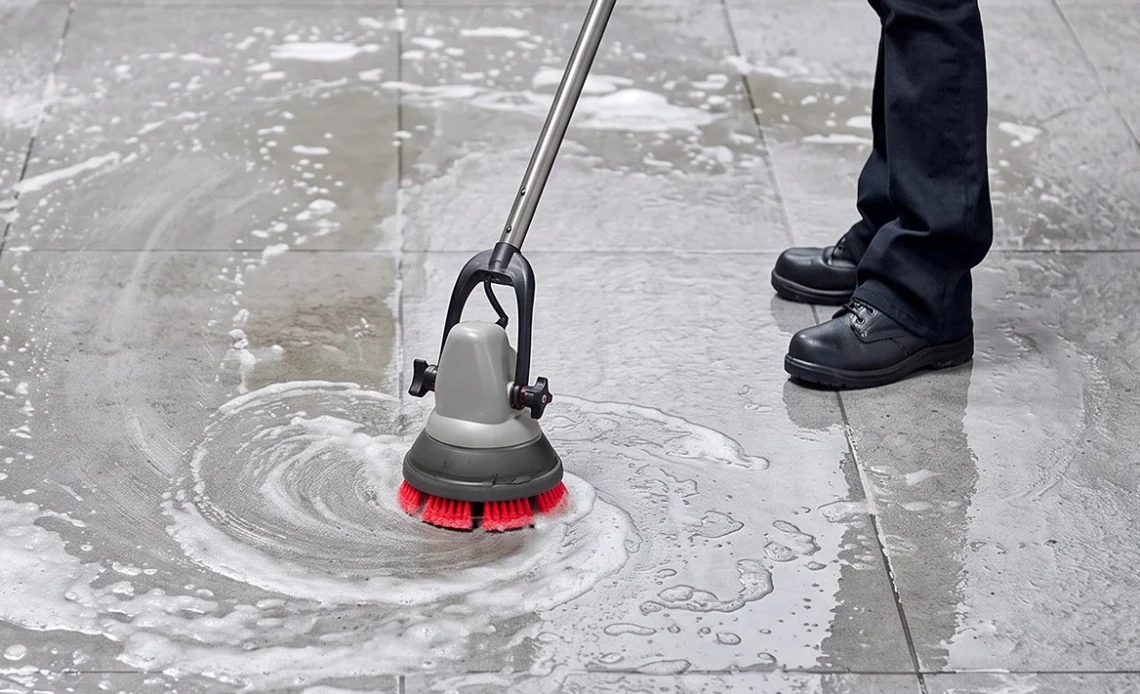
Reactive floor care is the default in most buildings. Something looks dirty, so someone cleans it. Carpets get extracted once a year, tile gets stripped and refinished on a schedule, spills get spot-treated when a tenant calls. It’s tangible work. You can see the before and after.
Prevention goes unnoticed. It’s the matting at the door, the walk-off zones in the lobby, the vacuum that runs before soil grinds into the fibers. Nobody sends a thank-you email about a mat. But the dirt that never enters the building is dirt you never pay to remove.
Both count as floor care. They solve different halves of the same problem, and property owners get in trouble when they fund one and ignore the other.
Reactive Cleaning Wins on Visible Recovery
There are situations where reactive work is the right call. A coffee spill in a class-A lobby doesn’t wait for next quarter’s plan. Post-event cleanup, move-outs, water intrusion, and stain extraction all demand a response, not a strategy.
Reactive cleaning also carries the appearance win. Restorative extraction on a tired common-area carpet can add years to something a leasing broker was ready to write off. When you’re preparing space for a tour, a deep clean earns its cost in a single afternoon.
The trap is treating reactive work as the whole program. If the only time floors get attention is after they’ve failed a visual test, you’re paying premium labor to pull out soil that shouldn’t have been there in the first place.
Prevention Wins on Unit Economics
The math on prevention is unfriendly to reactive-only budgets. Every pound of soil you stop at the door is soil you don’t pay to vacuum, extract, strip, refinish, or eventually replace.
That’s where prevention pulls ahead as an operating decision. A modest capital outlay on matting and a disciplined vacuuming cadence protect a much larger asset: the flooring itself, which is one of the more expensive line items in a tenant improvement package.
Prevention also compounds. Reactive cleaning resets the floor to acceptable levels. Prevention slows how fast the floor gets back to unacceptable. Over a five-year hold, that gap is real money.
Where Each Approach Actually Belongs
The useful question isn’t which approach is better. It’s which one fits the situation in front of you.
A few honest matchups:
- High-traffic Class A lobbies. Prevention leads. The volume of foot traffic makes entry capture the single most valuable spend, with reactive extraction as a scheduled backstop.
- Medical and daycare facilities. Both, weighted toward prevention. Indoor air quality and infection control tie directly to what gets tracked in, so matting and vacuuming with proper filtration carry outsized weight.
- Industrial and manufacturing floors. Reactive leads on the production side, where process soils are the real load, but prevention still matters at office and break-room transitions.
- Retail and showroom space. Prevention protects the merchandising surface; reactive handles the inevitable spills and seasonal weather events.
- Turnover and repositioning. Reactive dominates. When you’re prepping a space to lease or sell, restorative cleaning is the fastest way to move the appearance needle.
The Program That Beats Either One Alone
The buildings that spend the least on floors over time tend to run both approaches together, with prevention doing the heavy lifting and reactive work reserved for the situations that call for it. That’s the model most institutional operators are converging on, and it’s the reason serious commercial floor care providers sell programs rather than one-off cleanings. The value is in the cadence, not the visit.
For an owner, the practical move is to audit what you’re currently paying for. If the invoice is almost entirely restorative work, you’re funding the expensive half of the equation and starving the cheap half. If you’ve got mats at every entrance but haven’t extracted a carpet in three years, the reverse is true, and the floor is aging faster than it should.
Neither approach is a solution on its own. Prevention keeps the floor from getting worse. Reactive work makes it look better when it has to. Run both, evaluate the building you actually own, and the flooring stops being a recurring surprise on the P&L.