
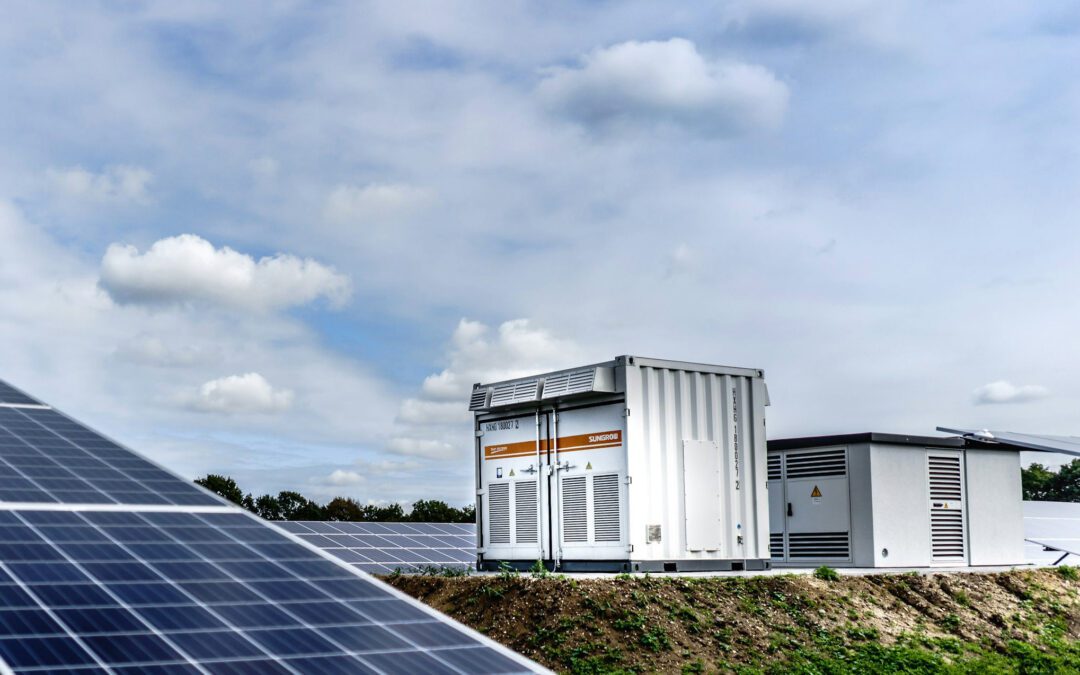
Solar panels and battery storage are often mentioned in the same breath, but plenty of people aren’t quite sure what the battery actually does or why you’d want one alongside panels rather than just the panels alone. Here’s a simple explanation.
What solar panels do on their own. Solar panels generate electricity while the sun is shining, and that electricity gets used in the building straight away if there’s demand for it at that moment. Any electricity a property doesn’t use immediately is either exported back to the grid, usually for a fairly small payment, or simply lost if there’s nowhere for it to go. This means a lot of the electricity generated during a sunny afternoon can go to waste if nobody’s actually using much power at that time.
What a battery adds. A battery stores the electricity your solar panels generate but don’t use straight away, so instead of exporting it to the grid for a small return, you can draw on it later, in the evening, overnight, or during a cloudy stretch when panels aren’t generating much. This is particularly useful for households and businesses with usage patterns that don’t line up neatly with daylight hours, which describes most people.
How much difference it actually makes. Without a battery, many solar systems only end up covering a fraction of a property’s total electricity use, because so much generation happens at times when demand is low. Adding a battery can significantly increase how much of your own solar electricity you actually use, rather than exporting it cheaply and then buying it back from the grid later at a higher price.
Backup power during outages. Some battery systems can also provide backup power if the grid goes down, keeping essential circuits running rather than leaving a property without electricity entirely. This isn’t automatic with every system, so it’s worth checking whether a particular battery and inverter combination supports this before assuming it’s included.
Sizing a battery correctly. A battery that’s too small won’t store enough to make a meaningful difference, while one that’s too large adds unnecessary cost without a proportional benefit. The right size depends on your typical daily usage pattern and how much solar generation you have to work with, which is why battery sizing is usually done alongside, rather than separately from, the solar panel design itself.
Is it worth the extra cost? Batteries add a meaningful amount to the upfront cost of a solar installation, so whether it’s worth it depends on your electricity usage pattern, local export rates, and how much you value backup power during outages. For many households and businesses, it makes the most sense when added at the same time as the solar panels, rather than retrofitted later.
There’s a good look at why a growing number of UK businesses are choosing to pair rooftop solar with battery storage specifically to reduce how reliant they are on the grid, covering the cost pressures and supply risks driving that decision, from renewable energy installations by GSMlimited.com, worth a read if you’re weighing up whether a battery makes sense for your own setup.
Solar panels and batteries solve two different problems, generation and storage, and understanding that distinction makes it much easier to work out what your own property actually needs.