
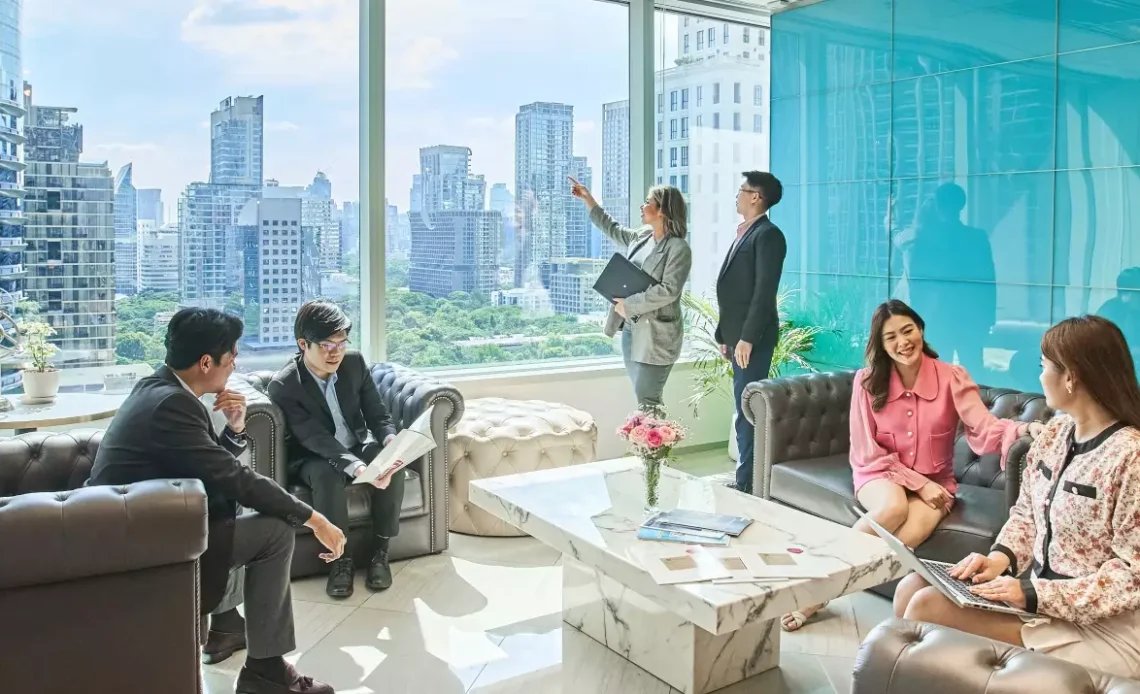
For much of the last century, office strategy centred on permanence. Companies invested heavily in long leases, fixed layouts, and infrastructure designed to remain unchanged for years. That model no longer reflects how organisations operate. Rapid shifts in staffing, technology, and market conditions mean adaptability now drives performance more than stability. This shift explains the growing interest in flexible office space bangkok as businesses seek environments that evolve alongside operational reality.
Adaptability is no longer a convenience. It has become a structural advantage.
Workforce Patterns Are No Longer Predictable
Hiring cycles fluctuate more rapidly than in previous decades. Project-based teams expand and contract, specialist roles rotate, and hybrid schedules vary week by week.
Fixed office footprints struggle to accommodate this volatility efficiently. Flexible environments allow space usage to match real occupancy rather than assumptions made years earlier.
Physical Space Must Support Changing Work Modes
Work has diversified. Some tasks require quiet concentration, others benefit from collaboration, and some rely on client-facing environments. These modes often coexist within the same team.
Adaptable offices allow teams to reconfigure how space is used without major disruption. This supports productivity without locking organisations into static layouts.
Capital Efficiency Influences Strategic Freedom
Long-term fit-outs and leases tie up capital that could otherwise support growth, product development, or talent investment. Businesses increasingly evaluate whether physical infrastructure generates proportional strategic return.
Flexible models convert fixed costs into variable costs, preserving financial agility and reducing exposure during uncertain cycles.
Speed of Change Outpaces Traditional Leasing Cycles
Technology adoption, regulatory shifts, and market dynamics move faster than property contracts. Organisations locked into long commitments face friction when operational needs evolve.
Shorter commitments and adaptable configurations align better with modern planning horizons.
Employee Experience Shapes Retention and Engagement
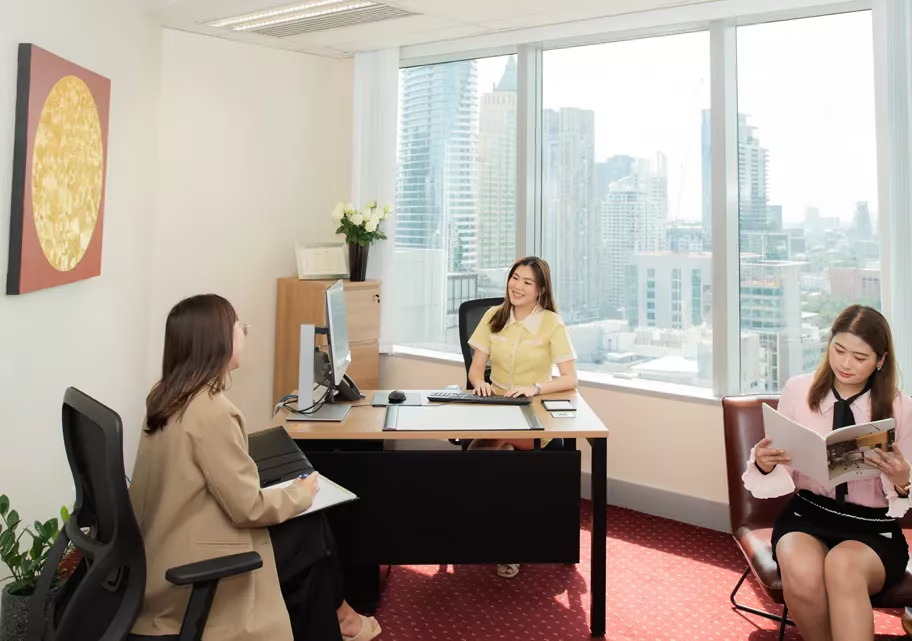
Work environments influence morale, collaboration quality, and wellbeing. Spaces that adjust to team needs rather than imposing rigid structure support stronger engagement.
Flexibility allows teams to shape their environment rather than adapt to it, improving satisfaction and productivity.
Scalability Without Disruption Protects Momentum
Growth often requires additional space, meeting areas, or specialist facilities. Flexible environments accommodate scaling without relocation or major reconfiguration.
This continuity protects workflow stability and reduces onboarding friction.
Risk Distribution Supports Resilience
Operational risk increases when organisations concentrate investment into fixed infrastructure. Flexible environments distribute risk across shorter commitments and shared resources.
This reduces vulnerability during economic uncertainty or strategic shifts.
Designing for Change Rather Than Prediction
Rather than attempting to predict future requirements, adaptable environments allow organisations to respond dynamically.
Designing for change acknowledges uncertainty as a constant rather than an exception.
In fast-moving markets, permanence can limit opportunity. Adaptability supports resilience, responsiveness, and strategic freedom, positioning organisations to evolve without unnecessary constraint.